I’m an architect, and for years I put up with a terrible desk.
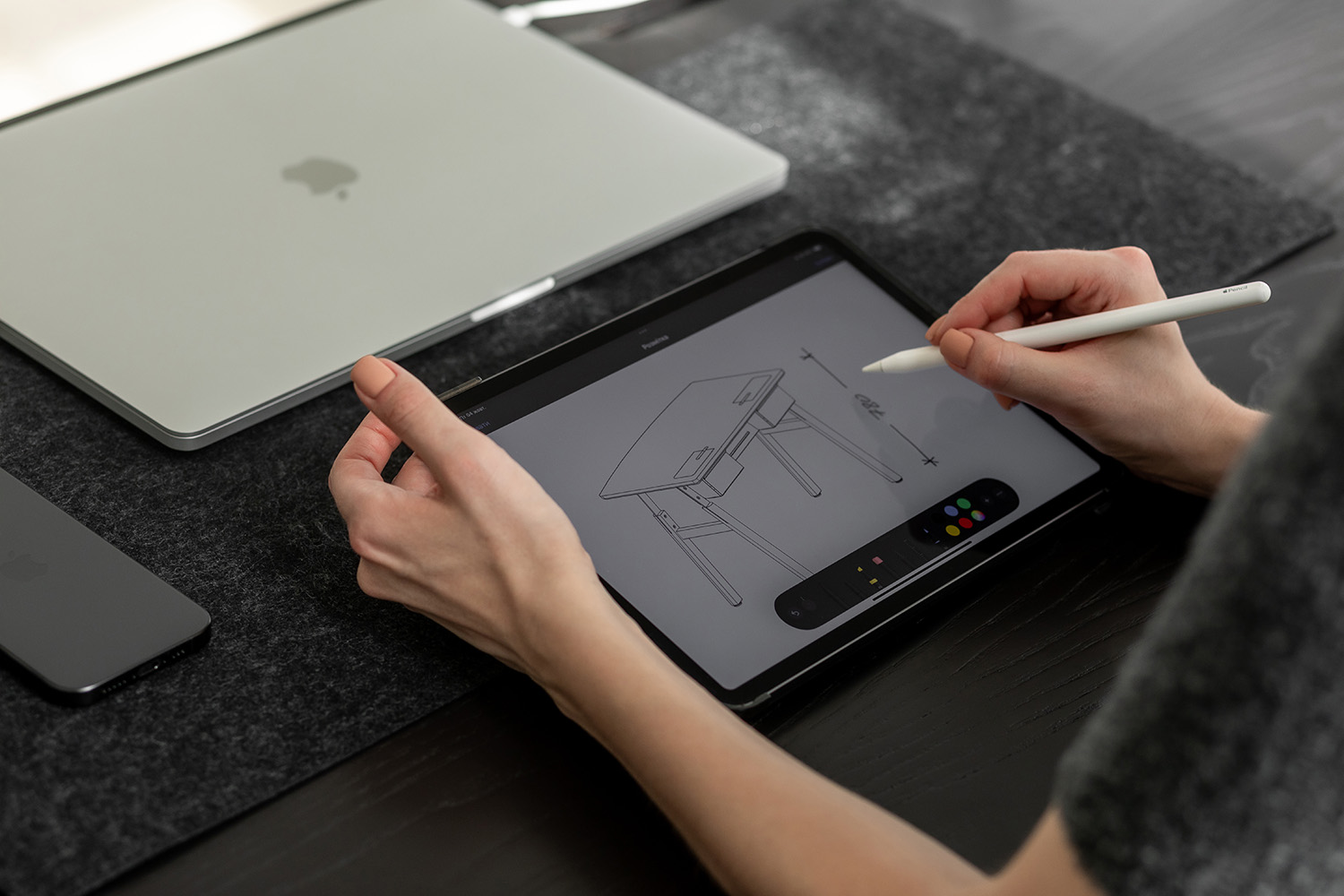
This is the story of how Dagny came to be — a work desk where everything has a place. And why, after so long not being able to find one, I ended up designing it myself.
Like most people who spend their days at a desk, I kept making compromises that actually bothered me: reaching under the desk to find a socket, having nowhere sensible to keep small things, sitting at a surface that was just slightly too low — and noticing the discomfort in my back a few hours later. Each of these felt like a minor detail. But they were the things that quietly wore me down every single day. Why, at a time when technology is moving faster than ever, are there so few properly thought-through solutions for a comfortable, modern work desk?
One day, looking at my desk yet again, I asked myself a straightforward question: what can I actually do about this — as someone who designs spaces for a living?
Cables all over the surface. A charger on the floor. Pens and pencils I didn’t want to put away somewhere out of reach. How many times a day do you reach under your desk for a socket? I counted: seven. Seven times a day I was spending energy on something that had no reason to be a problem in the first place.
What I needed was a desk that stayed clean and organised — not just after tidying, but because everything had a proper place.
I started approaching it as a spatial problem. There’s a whole category of things that need to be within reach, but off the surface. And there’s almost never a proper place for them.
That’s where the concept of Dagny started.
A place for everything
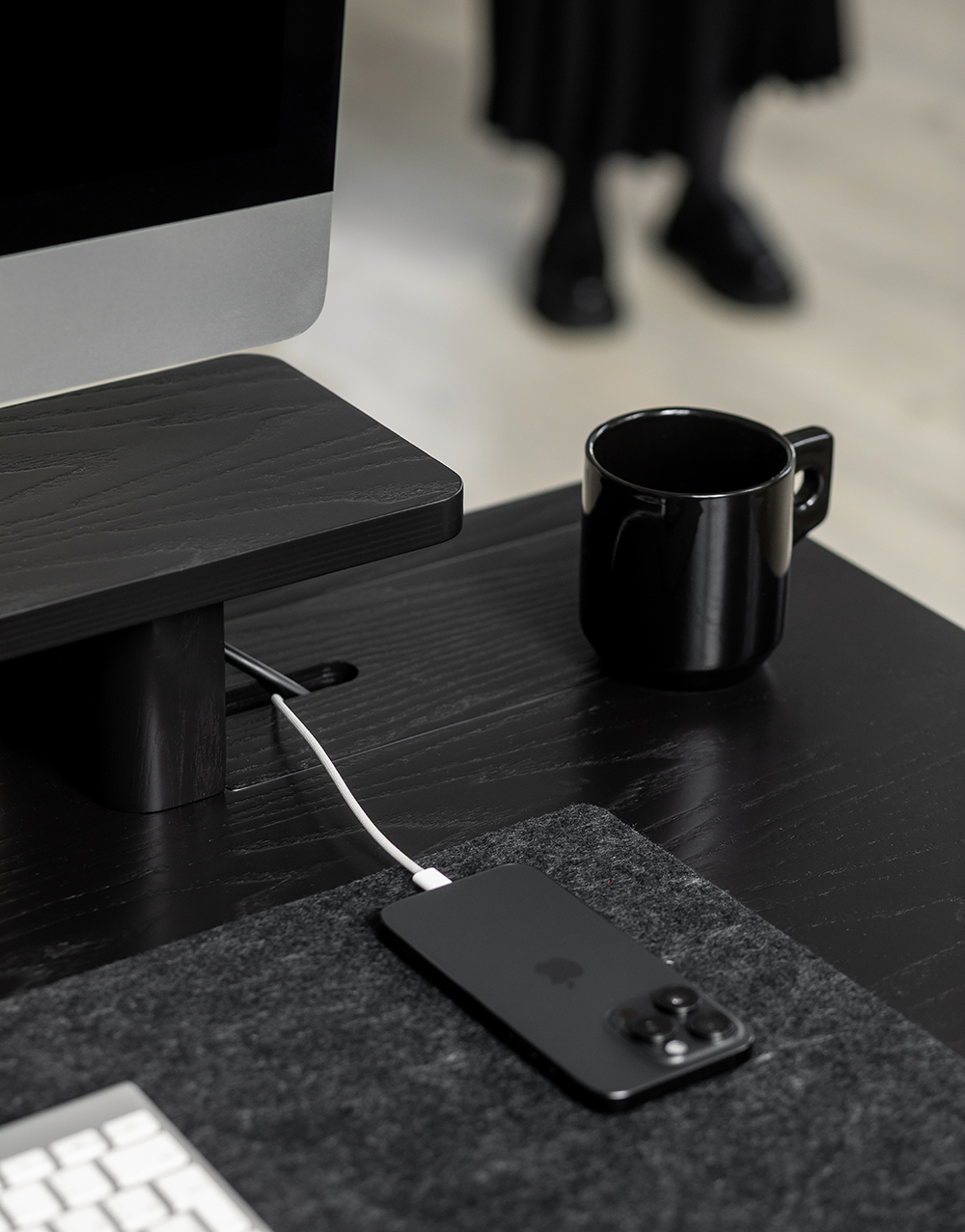
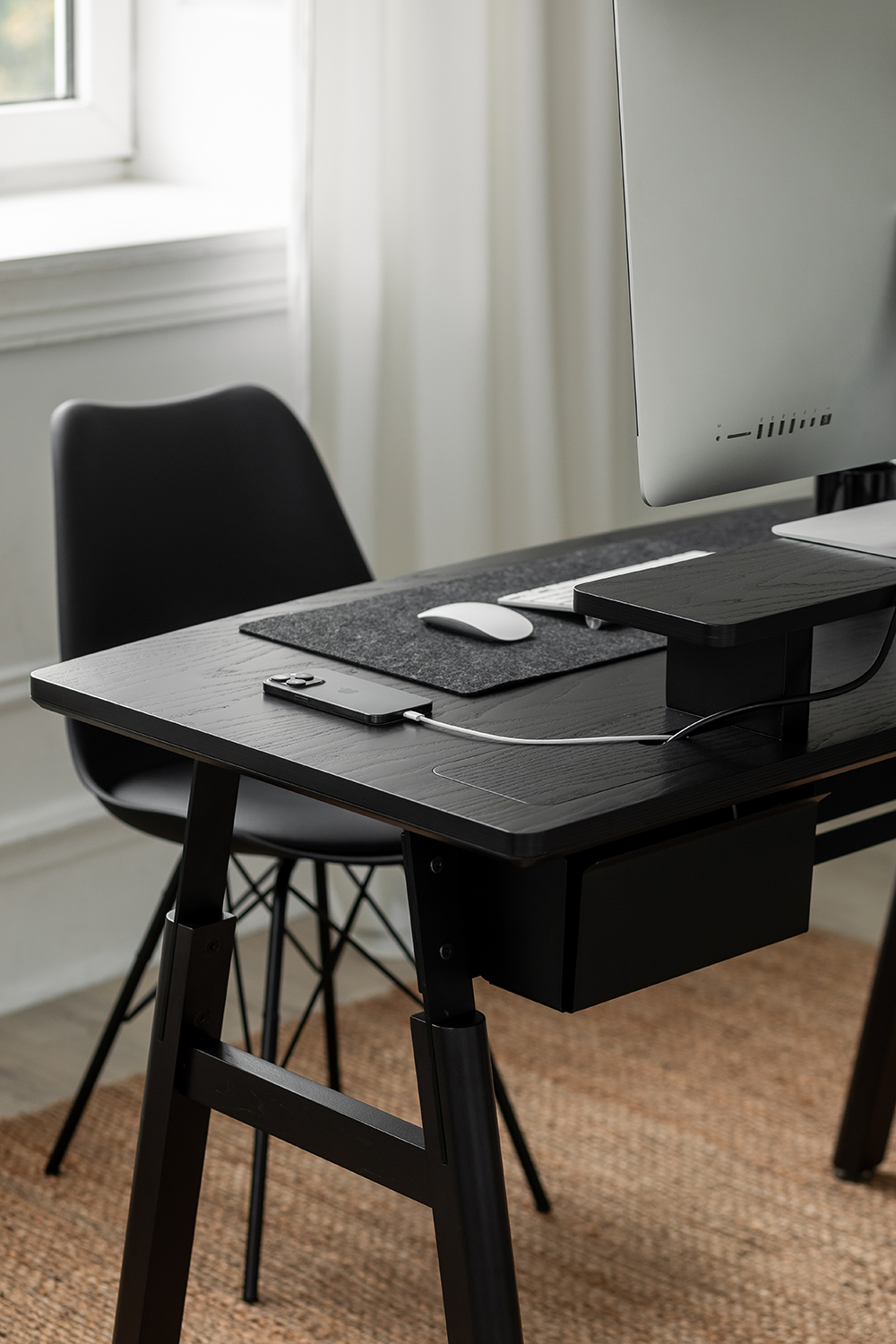
Dagny isn’t just a compact home office desk — it’s an environment where everything is in its place. Two generous side baskets with cable openings, positioned symmetrically on both sides with access from above: a MacBook charger fits, an extension lead fits, and all the small things fit too. No more reaching under the desk every time you need to plug something in.
.
Desktop height: 780 mm
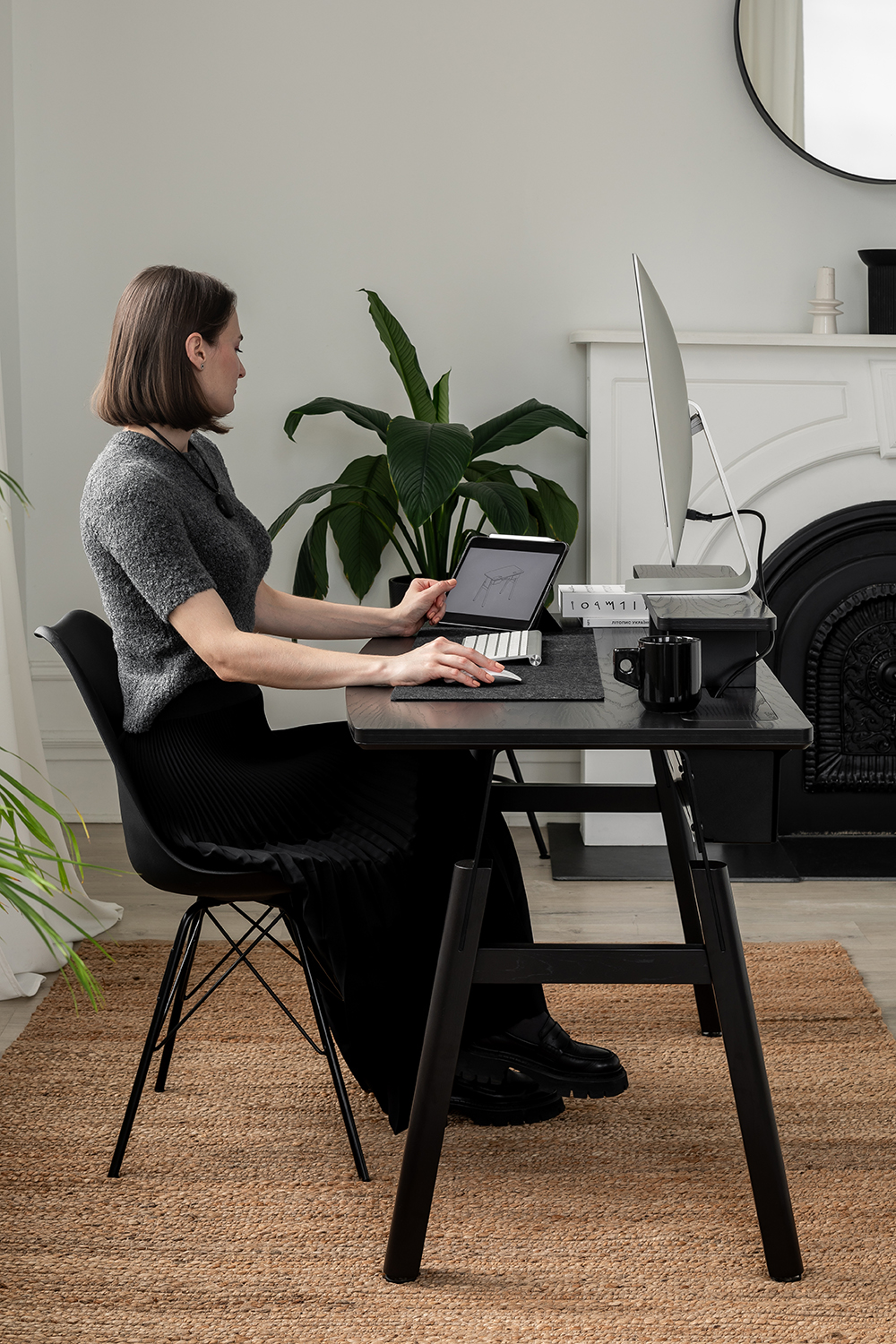
Slightly above standard. The difference became noticeable fairly quickly: I stopped unconsciously leaning forward towards the monitor and feeling tension in my lower back. My body just settled.
.
A natural wood surface
The grain is warm to the touch and easy on the eye. I hadn’t expected the material of a desk to have any effect on how I felt while working. But it does. There’s something about contact with natural wood that calms you down and helps you focus.
Function as part of the design
What interested me most during the development process was this: could function be an organic part of the design — so that everything worked together as a single whole? So that nothing looked like it had been added on as an afterthought? So that the desk simply functioned as a complete system — practically and visually?
I think it does. The best design is the kind you stop noticing — and once you have it, you forget you ever had to compromise.
.
Yuliia, founder of Susy Space
What takes the most out of your workspace each day — not time, but energy? Write to us on Instagram. I’d genuinely like to know — and it might become the starting point for the next solution.
Photo credits: Misha_Lukashuk
.