You look at your favourite armchair, the one you bought as a quality piece that would last for years, and something has gone wrong. Someone spilled wine on the cushion and dry cleaning won’t fix it. Or you’ve moved to a new flat and the chair simply doesn’t work in the new space. Or a deep scratch has appeared on the wood and you’re not sure where to even begin.
Each time, the answer ends up being the same: buy new. The piece itself was fine, but the system just never offered another way out.
Almost every product carries a sustainability label these days. But strip away the marketing and the point is simple: sustainability in furniture isn’t about a material or a certificate. It’s about the system that determines what happens to a piece ten years from now.
Since 1960, the volume of furniture waste worldwide has grown by 450%. Most of it didn’t break. It went out of style, stopped fitting the new interior, or simply couldn’t be restored.
Susy Space is built on a different logic.
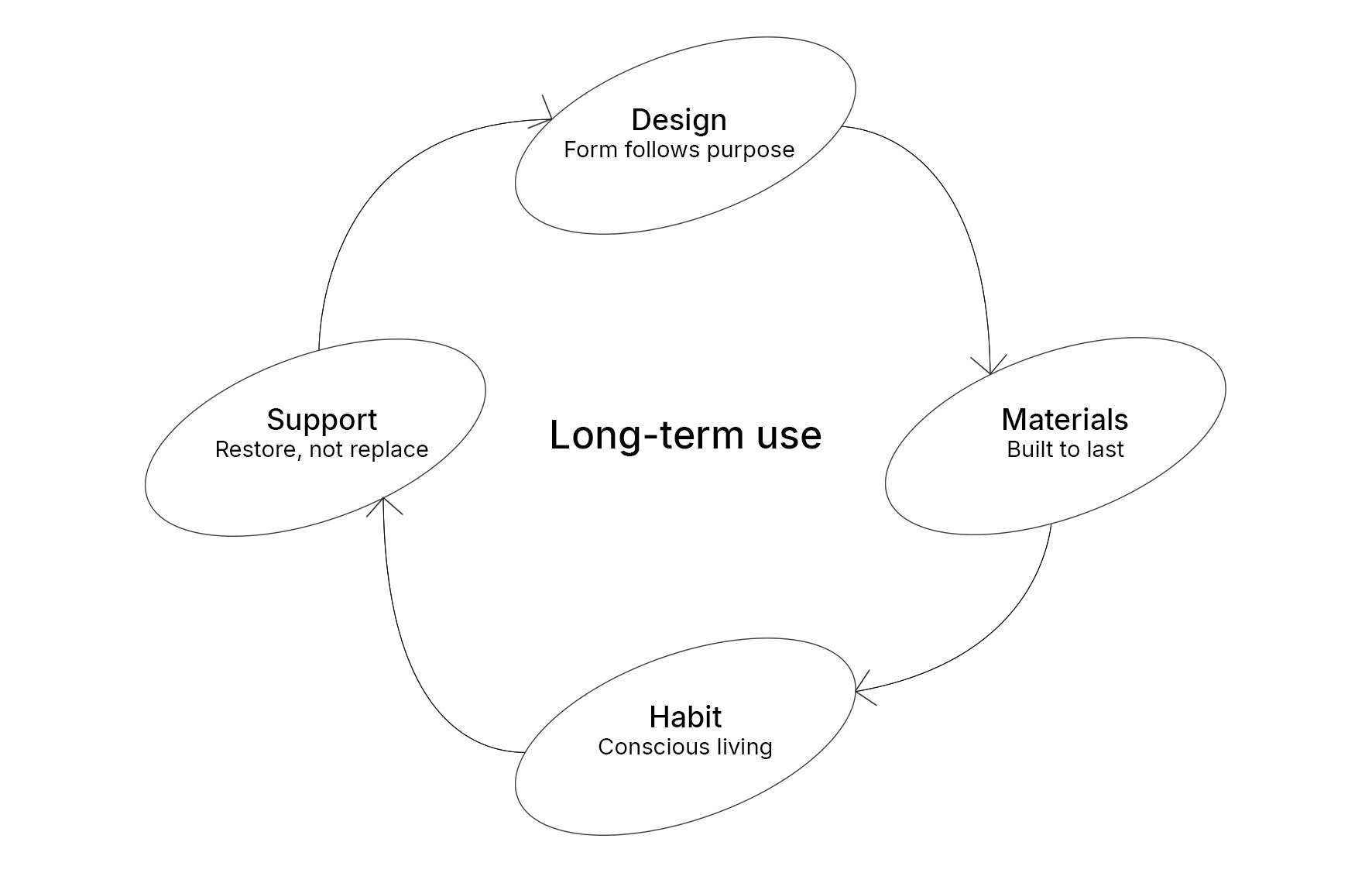
.
Design
Sustainability in furniture design is defined by how a product functions at every stage of its existence, from the choice of materials to the end of its lifecycle. Everything at Susy Space forms a considered and calibrated system, one that moves away from the linear buy-and-discard model towards a circular approach where resources are used responsibly and each piece is built for long-term use and adaptation to the way modern spaces and lives evolve.
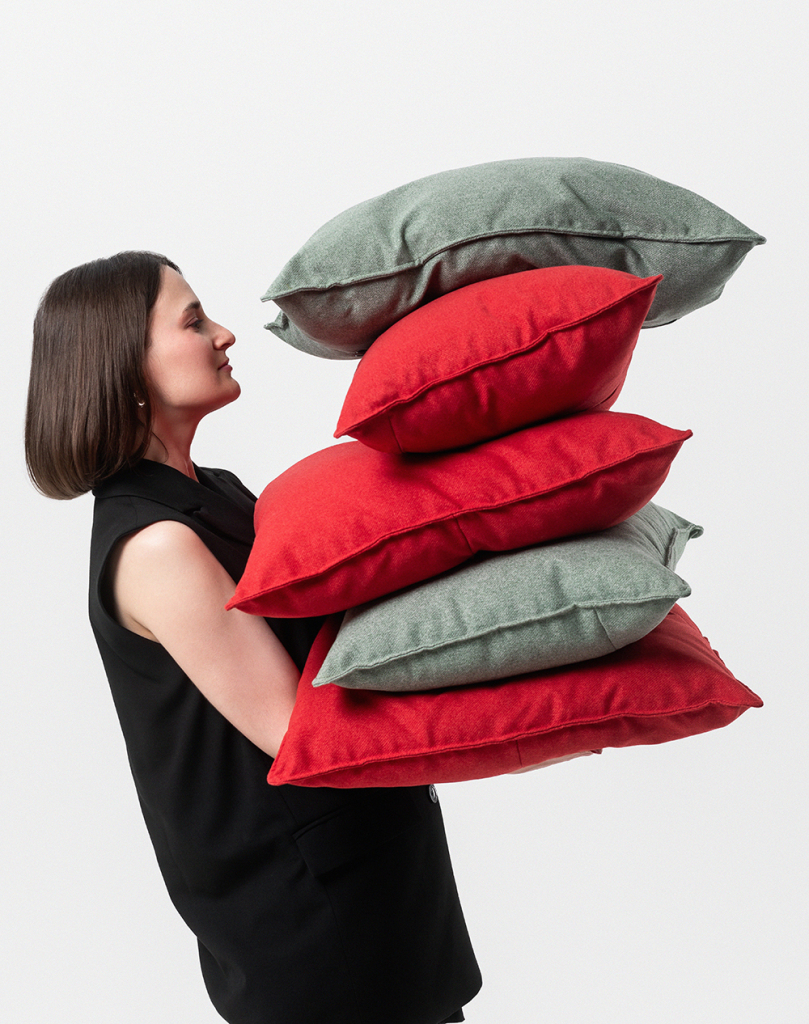
This thinking begins at the design stage. The replaceable cushions in the Susy collection can be updated as needed without replacing the whole piece. The mid-century modern aesthetic ensures the furniture remains appropriate across different interiors without losing its relevance over time. The knock-down construction simplifies transportation and allows individual components, both upholstered and structural, to be replaced if damaged.
Materials
For our furniture to serve you well over the long term, the choice of materials was the logical next step. Ash, moisture-resistant plywood and metal with Polish and German hardware: everything is selected with durability, restorability and eventual recyclability in mind. Appearance alone is never enough — a material has to hold its quality over time. Natural wood doesn’t wear out. It develops character.
Support
Restoration is part of a piece’s lifecycle, not an expensive exception. We are working on a service that will allow furniture to be restored and returned to full use. Every piece that gets a second life is a step towards genuinely waste-free and conscious consumption.
Habit
A circular system changes the way we relate to furniture and, through that, supports the broader intention to live more consciously. There is still a gap between intention and behaviour, shaped by cost, convenience and established habits. Research shows that lifestyle changes could reduce greenhouse gas emissions by 40–70% by 2050 (IPCC, Sixth Assessment Report, 2022), and approximately two-thirds of all consumption-related emissions are connected to individual lifestyles (UNEP, Emissions Gap Report, 2020).
So our focus extends beyond making furniture that is well-made and responsible. We want to make it genuinely possible to keep using it for a long time. Susy develops solutions that allow pieces to be updated and restored rather than discarded. Through our community, we share research, practical ideas for organising space and real examples of how sustainable choices work in everyday life.
Our long-term goal is for long-term use to become the natural default.
Because the most sustainable thing is the one you never have to buy again.
What things in your home would you want to keep forever, if you knew they would hold up for you?
Write to us on Instagram.